
You signed a copier lease that looked cheap per month. Two years in, the bills have crept up, the machine is more than you need, and the contract says you can’t leave. Sound familiar?
Here is the short version. The difference between renting and leasing a copier comes down to flexibility versus price: a rental costs more per month but lets you walk away, while a lease costs less per month but locks you in for years. Choosing well depends on how long you need the machine and how well you understand the contract.
At Clear Choice Technical Services, we service copiers under both arrangements, and we see the same lease surprises again and again. This guide covers the costs, the exit options, and a simple way to decide.
TL;DR: The difference between renting and leasing a copier is primarily contract length and cost structure. A copier lease runs 24 to 60 months with lower monthly payments and limited flexibility, while a copier rental covers days to 12 months at a higher monthly fee with easy cancellation. Clear Choice Technical Services offers both options and can help you pick the right agreement type for your budget and timeline.
Key Takeaways
Quick facts for busy office managers and finance leaders:
- A copier lease locks in a fixed term of 12 to 60 months with lower monthly payments; a copier rental runs day-to-day or month-to-month with higher monthly costs but no long term commitment.
- Over a 2 to 5 year period, leasing is typically more cost effective because the monthly payment is 40 to 70% lower than renting the same machine.
- Fair market value (FMV) leases keep monthly payments lower than $1 buyout leases, but require a buyout or return decision when the lease term ends.
- Hidden costs in copier lease agreements, including escalator clauses, return shipping fees, and auto-renewal traps, can add $1,500 to $3,000 per year beyond the base payment.
- Rule of thumb: rent if your need is under 12 months or uncertain; lease if you plan to use the device for 24 months or more with predictable print volume.
- Renting protects cash flow for startups, seasonal projects, and temporary offices that cannot commit to multi-year contracts.
What’s the Real Difference Between Renting and Leasing a Copier?
Most small and mid-sized U.S. businesses no longer buy a copier outright. According to the Equipment Leasing and Finance Association, 82% of organizations used financing for equipment in 2023. The choice almost always comes down to a copier lease versus a copier rental.
The difference is straightforward. Leasing is a copier lease agreement lasting 24 to 60 months. It delivers lower monthly payments but requires a long term commitment. Renting is a short term arrangement, from a single day up to about 12 months, with a higher monthly rental fee and easy cancellation.
Leasing typically makes sense for stable offices with ongoing printing and scanning needs. Renting is better for projects, temporary offices, or trial periods where you are still evaluating your print volume. Several factors, including contract length, cash flow, and service coverage, determine which option fits.
Clear Choice Technical Services provides copier leasing, copier rentals, and managed print services to help businesses find the right plan for their budget and timeline.
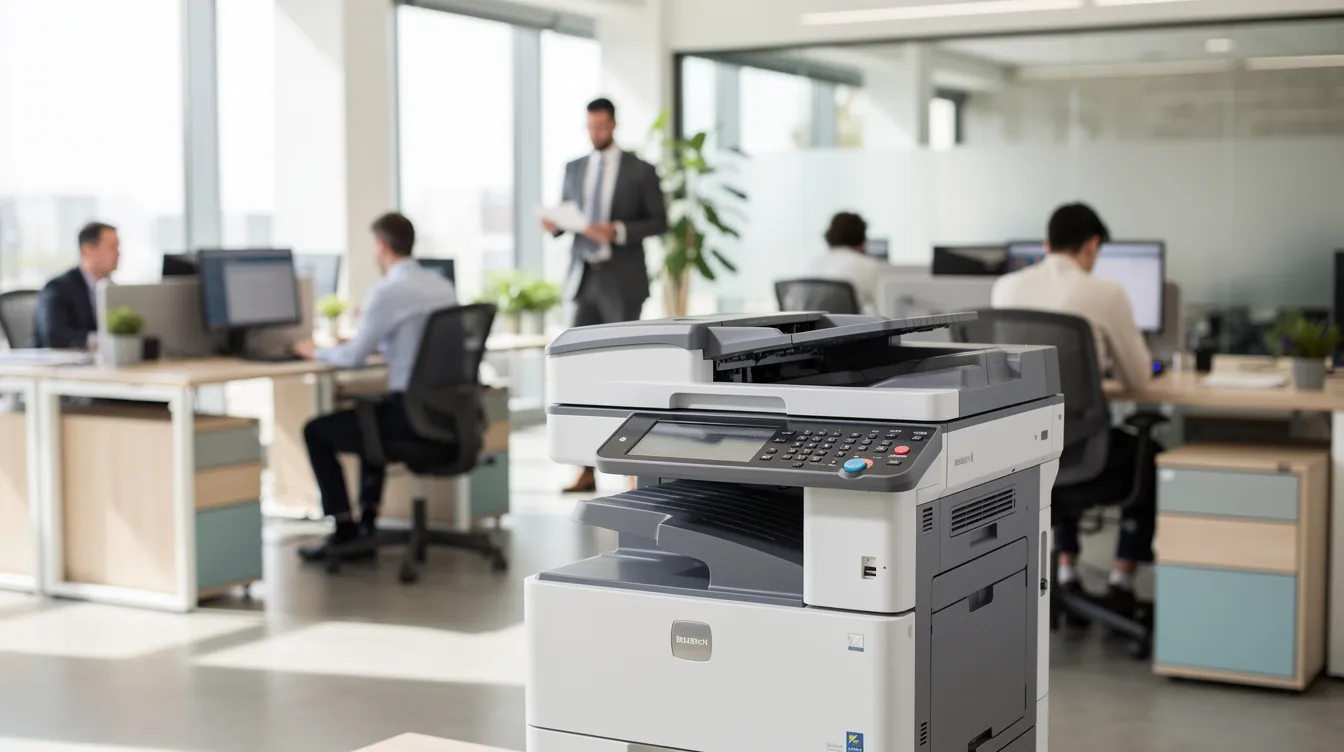
Key Differences at a Glance: Copier Lease vs. Copier Rental
A copier lease and a copier rental differ across four dimensions: contract length, pricing structure, flexibility, and end-of-term options. The lease term on most office equipment runs 36 to 60 months, while rental terms range from daily to monthly with no set period beyond 12 months.
Under both a lease and a rental, the leasing company or rental provider owns the copier equipment. You never hold title to the machine unless you exercise a buyout option at the end of a lease. Renting copiers never transfers ownership.
Billing also works differently. A lease typically splits into a fixed base monthly payment for the device plus a cost-per-copy charge for pages beyond an included allowance. A rental tends to bundle everything, toner, regular maintenance, delivery, and pickup, into one flat fee. Both leasing and renting require careful review of the service agreements before signing.
| Feature | Leasing | Renting |
| Contract length | 36 to 60 months (sometimes 12 to 24) | 1 day to 12 months |
| Upfront costs | Low or none | Low or none |
| Monthly price range | $50 to $700 | 40–70% higher than lease for the same device |
| Included maintenance | Often bundled or via separate service contract | Usually included in a single fee |
| Upgrade flexibility | Limited; upgrades around months 42–48 | Swap or return anytime |
| Ideal use cases | Headquarters, law firms, clinics | Trade shows, temporary offices, seasonal peaks |
How Do Copier Lease Costs and Rental Costs Really Compare?
Leasing wins on cost effectiveness over 24 to 60 months. Renting is cheaper when your need is short term or unpredictable, because early termination of a lease often requires paying the full cost of remaining payments.
Monthly payments for leasing a copier or multifunction printer range from $50 to $700 depending on speed, features, and volume. A small monochrome desktop might run $50 to $100 per month; a mid-range color MFP sits around $150 to $350; a high-volume production copier with finishing can exceed $450. Rental rates for similar machines run roughly 40 to 70% higher per month.
An FMV lease (fair market value lease) keeps the monthly payment lower because you are not paying off the full purchase price. At the end of the lease term, you return the machine or buy it at its current fair market value. A $1 buyout lease carries higher monthly payments but lets you own the copier outright for one dollar at term end. The right lease types depend on whether ownership matters to your plan.
Hidden costs in copier lease agreements to watch for:
- Annual escalator clauses (3 to 5% rate increases compounding each year)
- End-of-lease return shipping ($300 to $800 for large A3 machines)
- Property tax pass-throughs ($50 to $300 per year)
- Auto-renewal if you miss the 60-to-90-day notice window
- Data sanitization fees for hard drive wiping ($200 to $500)
- Overage charges for color pages beyond the allowance ($0.06 to $0.12 per page)
Rental hidden fees are fewer but still real: delivery and pickup charges, per-page overages beyond the included allowance, and extra fees for network setup or moving the unit between floors, especially if you are working with specific brands and models that require detailed service documentation.
Worked example: A $10,000 copier on a 60-month FMV lease at roughly $200 per month totals about $12,000 in base equipment payments alone (service and click charges add more). Renting the same machine for 6 months at a bundled rate of $350 to $450 per month costs $2,100 to $2,700 total. Leasing can cost more over the full term than buying outright, but it preserves cash flow and avoids a large upfront purchase, which matters if you are comparing leasing against buying a dedicated multifunction printer outright.
When Is Copier Leasing the Better Choice?
Copier leasing is a multi-year equipment financing and service arrangement best suited for stable offices with consistent monthly volume over at least 24 to 36 months. Long-term leasing suits established businesses with predictable printing needs.
Ideal scenarios: headquarters offices processing daily operations documents, law firms scanning case files, accounting practices printing through tax season and beyond, schools with semester-cycle workflows, and medical clinics generating patient records. In each case, the print volume is steady and the location is fixed.
Benefits include lower monthly cost than renting for the same copier machine, access to the latest technology and modern equipment without upfront costs, and the ability to bundle a maintenance contract and supplies into a single monthly payment. Service agreements typically cover toner, parts, and labor. A copier lease often pairs with a service plan, and service agreements save businesses money on supplies and repairs, especially when you have access to detailed service and parts manuals for specific copier models. Leasing often allows end-of-term options such as purchase or upgrade.
Drawbacks: businesses often face penalties for breaking a leasing contract early. Most copier lease agreements last between 12 to 60 months. Among A3 devices, 78.6% of copier leases run for 60 months, and 64.1% of A4 copier leases use 48-month terms. Upgrades commonly happen around months 42 to 48. If your copier lease auto-renews because you missed the notice window, you could be locked in for another 6 to 12 months.
Clear Choice structures copier leases with managed print services and remote IT support so your internal staff does not have to manage aging equipment or troubleshoot printer errors. Managed print services can enhance operational productivity by offloading device management entirely.
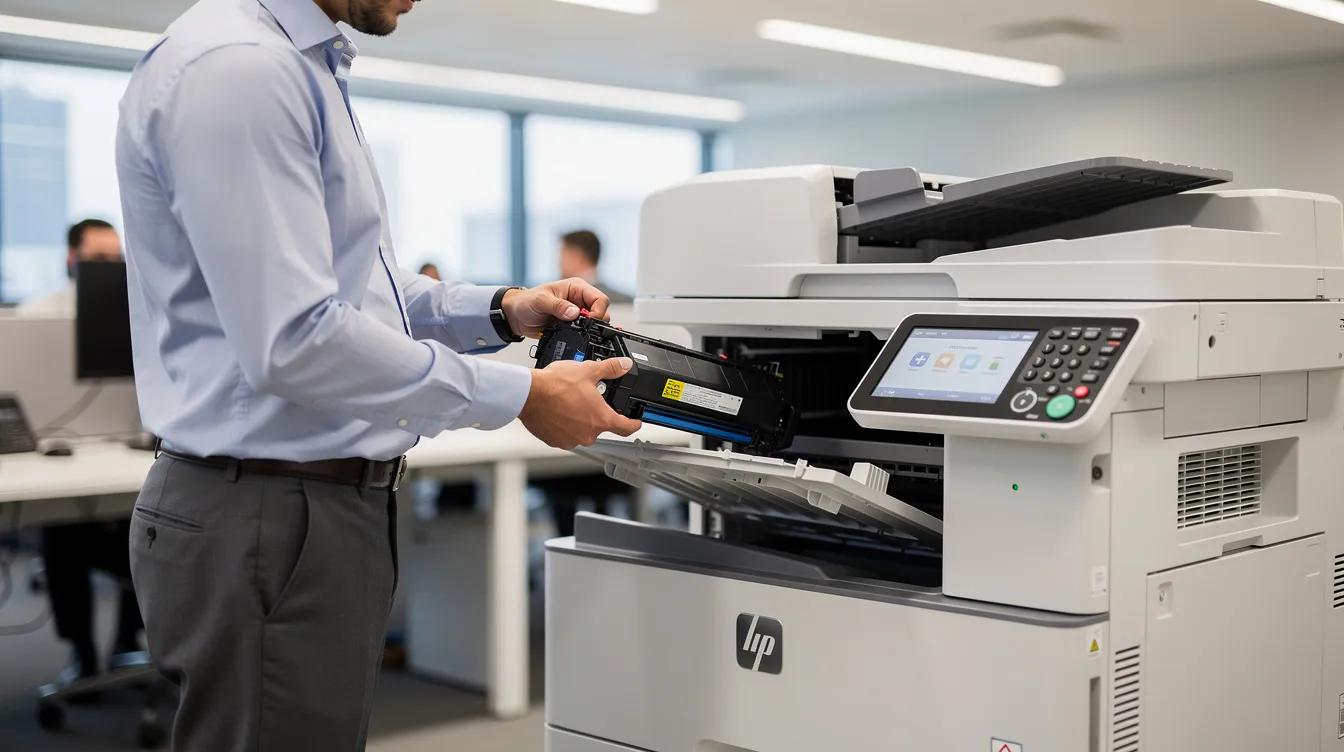
When Is Copier Rental the Smarter Move?
Copier rentals are ideal when you need a professional copier machine fast, for a short, defined period, and do not want a multi-year copier lease agreement. Renting provides maximum flexibility with typically short-term agreements.
Realistic use cases: construction trailers, pop-up or temporary offices, seasonal peak work like tax season surges, litigation war rooms, training centers, conferences and trade shows, and disaster recovery sites. Short-term rental agreements appeal to startups and seasonal projects. Renting is ideal for temporary needs lasting days to weeks.
Advantages: no long term commitment, easy to scale up or down, and renting generally includes basic support and supplies in a single rental fee. Qualification is simpler; short-term copier rental providers often run lighter credit checks than leasing companies, making this path accessible for newer businesses.
Downsides: renting a copier typically involves higher monthly rates than leasing. Renting often incurs higher monthly costs than leasing for the same device. You build no equity or ownership. Inventory in some markets may skew toward older or refurbished models. And there are fewer copier lease options for customization compared to a full lease.
When does it make sense to rent instead of lease a commercial printer? When your timeline is under 12 months, the future of the location is uncertain, the printing is project-based or event-based, or you are testing actual print volume before committing to a longer period. If the rental extends beyond expectations, Clear Choice can convert a rental into a lease on the same machine so you avoid starting over, and can support that device with comprehensive copier service and parts documentation.
What If You Need to Change or End a Copier Lease Early?
Most copier leases are non-cancellable. Early termination usually means paying all or most remaining payments, a fair market value buyout, or a negotiated settlement that rolls the balance into a new copier lease. There is no single right answer for every situation; the right answer depends on your current equipment needs and the contract language.
Can you get out of a copier lease early without paying? Almost never without some cost. If you have 12 months left at $200 per month, expect an obligation of $2,400 to $2,800 depending on residual and fees. Some dealers will absorb part of that obligation if you sign a new, longer agreement with them.
What to do when your copier lease auto-renews: review the notice period (commonly 60 to 90 days before term end), send written non-renewal notice to both the finance company and the dealer, and schedule pickup to avoid paying for extra months.
Steps to take if you need out:
- Pull and read your copier lease agreement, focusing on termination and renewal clauses.
- Contact the leasing company and request an early payoff quote in writing.
- Compare the payoff against the cost of riding out the remaining term.
- Ask whether switching to a new lease or rental can offset the balance.
- Contact Clear Choice to review your agreement and help negotiate a transition.
Clear Choice assists new clients in navigating an existing lease, planning a smooth transition, or right-sizing into a new copier leasing or managed print plan across its nationwide service locations.
How to Choose: A Simple Step-by-Step Framework
This checklist helps operations and finance teams pick between a copier lease and a copier rental in five steps.
- Define how long you need the device. If under 12 months or highly variable, a copier rental is safer. If 24 months or more with stable volume, a copier lease is likely more cost effective.
- Estimate monthly black-and-white and color page volume. Underestimating color pages creates expensive overages. Leasing agreements usually include maintenance and service options tied to page allowances, and they work best when supported by detailed service and parts manuals for your copier line.
- Review cash flow and balance sheet preferences. Leasing and renting are both operating expenses (OpEx), but a lease is a fixed term obligation. Flexibility is a key factor for businesses with changing needs.
- Evaluate in-house IT and support capacity. If you lack internal staff, bundling a service contract or preventive maintenance removes that burden and ensures that technical troubleshooting and component-level repairs are handled correctly.
- Decide if you want ownership or continuous upgrades. A $1 buyout lease grants ownership at term end. An FMV lease or rental does not.
Rule of thumb: Rent if under 12 months or highly variable. Lease if 24+ months and predictable.
Clear Choice offers copier lease options, short-term copier rentals, and managed print services to simplify daily operations regardless of which path you choose.
Conclusion & Next Steps With Clear Choice Technical Services
The difference between renting and leasing a copier is simple: renting buys flexibility, leasing buys a lower monthly price in exchange for a multi-year commitment. Rent when your need is short or uncertain. Lease when it’s stable and long-term, and only after you’ve checked for escalators, separate service contracts, buyout terms, and auto-renewal windows.
Get a copier lease or rental in Birmingham without the fine-print surprises
Clear Choice Technical Services makes getting a copier lease in Birmingham, or a short-term rental, quick, easy, and affordable. We explain every term in plain language, from buyout options to renewal dates, and our pricing is upfront, so there are no hidden fees, surprise escalators, or auto-renewal traps. Whether you’re in Hoover, Vestavia Hills, or downtown Birmingham, we’ll help you choose the option that fits your budget and how long you actually need the machine.
Call us now at (205) 409-9338 for a free quote or a no-pressure review of your current copier contract.


